Episode Transcript
[00:00:10] Speaker A: Which word, Johnny? Yesterday, of course.
Yesterday I woke up late, missed the bus and arrived at work with two different socks.
[00:00:22] Speaker B: Two different socks? Matthew, that isn't very serious.
[00:00:26] Speaker A: Well, I don't know. One was black and the other was bright yellow.
[00:00:31] Speaker B: Okay, that's more serious.
[00:00:34] Speaker A: But Johnny, did you notice something?
I said, woke up, missed and arrived.
Three actions that started and finished in the past.
[00:00:44] Speaker B: Exactly.
Yeah.
[00:01:03] Speaker A: For example, yesterday I visited my parents.
Or last weekend I watched a film.
And in 1903 the Wright Brothers flew an aeroplane.
And later we'll talk about some famous first moments in history. For example, the first airplane flight, the very first telephone call and the first message sent between computers.
[00:01:55] Speaker B: That's right. Small moments that completely changed our world.
[00:02:00] Speaker A: Well, Johnny, let's get started. You're listening to the Trainlang podcast, your place to learn English. So why not get started with your free class? And if you're watching, you'll see the link on the screen or visit trainlang.com you can learn English with the best online school.
[00:02:22] Speaker B: So, but first let's go to the fictional dialogue. Find out what happened when Matthew and I visited the Museum of famous furs. So, Matthew.
Okay.
[00:02:40] Speaker A: So Johnny, did you enjoy the museum yesterday?
[00:02:44] Speaker B: Yes, I enjoy the museum.
I didn't enjoy going there with you.
[00:02:49] Speaker A: Oh, why not? I was excellent company.
[00:02:53] Speaker B: Matthew, you press an alarm button, crashed an airplane and lost your phone.
[00:02:58] Speaker A: Well, I didn't crash a real aeroplane.
[00:03:02] Speaker B: Only because the museum didn't give you one.
[00:03:05] Speaker A: But we won the competition, Johnny.
[00:03:08] Speaker B: Well, we won because I answered the questions.
[00:03:11] Speaker A: Yeah, well, I made the evening more exciting.
[00:03:15] Speaker B: Well, that's one way to describe it, Matthew.
[00:03:17] Speaker A: We arrived at 7 o' clock and entered the telephone exhibition.
[00:03:22] Speaker B: Yeah, we needed to find an old telephone and listen to a recorded clue.
[00:03:26] Speaker A: Well, Johnny, I found the phone and I saw a large red button.
[00:03:32] Speaker B: There was a sign next to it.
[00:03:34] Speaker A: Yes, I. I didn't read the sign.
[00:03:38] Speaker B: You press the button and accidentally call the museum cafe.
[00:03:42] Speaker A: The woman answered and I panicked.
[00:03:45] Speaker B: So then what? You ordered two pieces of chocolate cake?
[00:03:48] Speaker A: Well, I didn't want to be rude.
[00:03:51] Speaker B: So the next clue took us to the flight simulator.
[00:03:54] Speaker A: I wanted to be the pilot.
[00:03:57] Speaker B: But Matthew, did you read the instructions?
[00:03:59] Speaker A: Well, no, but I watched a film about pilots last year or.
[00:04:06] Speaker B: Your flight lasted 12 seconds, Johnny.
[00:04:10] Speaker A: There were 12 exciting seconds.
[00:04:12] Speaker B: Yeah. And then you crash into the virtual gift shop.
[00:04:14] Speaker A: Yes, it was a difficult landing.
[00:04:18] Speaker B: You arrived through the roof.
[00:04:20] Speaker A: Well, after that we went to the computer exhibition.
[00:04:23] Speaker B: Very good. Then you locked the word logging, but the computer only sent the letters L And o. I know.
[00:04:30] Speaker A: I thought the screen had stopped working.
I thought I'd broken another machine.
[00:04:35] Speaker B: Yeah, but the museum employee explained that it was part of the exhibition.
[00:04:39] Speaker A: For once, it wasn't my fault.
[00:04:41] Speaker B: Yeah, but then you noticed that your phone wasn't in your pocket.
[00:04:44] Speaker A: I know.
We searched everywhere.
[00:04:47] Speaker B: So did you leave it in the cafe?
[00:04:49] Speaker A: No.
[00:04:50] Speaker B: Did you lose it near the simulator?
[00:04:52] Speaker A: No. The receptionist found it inside the competition prize box.
[00:04:58] Speaker B: You put it there when you completed the final challenge.
[00:05:02] Speaker A: And we won a weekend in a countryside hotel.
[00:05:05] Speaker B: Yeah, hotel with no Internet, no mobile phone signal.
[00:05:09] Speaker A: Yeah. That doesn't sound like a prize.
[00:05:12] Speaker B: Yeah. After yesterday, you need a holiday from technology, Matthew.
All right. So vamos aba yisrael importante del ingles el paz. Simple.
[00:05:26] Speaker A: Yes.
Yesterday, Last night, last weekend, two days ago. Or maybe in 2020.
[00:05:59] Speaker B: We arrived after the at the museum. Matthew pressed the button and we went to the flight room.
Watch.
Watched. He called. So called.
[00:06:25] Speaker A: La estructura is muy simple. Subject plus verb in an in pasado pona hemplo. I visited the museum. Or we searched for. The phone.
Is for that. So. Ayalgunos cambios importantes. Quetelemos quetana in cuenta. C El verbo termina in E or E solo ania de live serie lived. Consonante Mas I grego Seria e de or ied Study. Studied.
I vocal Mas I grega pues ede Play.
Played. Ilos verbos cortos aves duplicamos e constonante.
Stop. Jeva dos pes. No. Stopped.
[00:07:29] Speaker B: Consonant. Vowel. Consonant.
Una coces consonante.
Go. Seria went.
[00:08:08] Speaker A: We went to the museum. The receptionist found the phone. We won a prize.
Subject.
Mass. Didn't mass. Infinitive. Algunos or hemplos. I didn't read the sign.
We didn't find the phone.
[00:09:08] Speaker B: I didn't read. No, I didn't read.
Okay. Or we didn't go.
We didn't went.
[00:09:45] Speaker A: Did you enjoy the museum or did they win the competition?
[00:09:53] Speaker B: Or. No, I didn't.
[00:10:06] Speaker A: See. Where did you go?
What did you see?
Why did Matthew press the button?
Watched.
Watched.
Stop. Tambien. Stopped.
Stopped.
Call. Cold.
[00:11:19] Speaker B: Called.
[00:11:25] Speaker A: Played.
And id.
The id. Sound id wanted. Visited.
[00:11:44] Speaker B: With voice or voiceless.
Visited. Want. Wanted.
[00:12:13] Speaker A: Maybe enjoy.
Yesterday I watched a film.
No, yesterday I watch a film.
[00:12:26] Speaker B: Correcto.
No, yesterday I watch it a film.
[00:12:52] Speaker A: Wow. And we have three clues to help Johnny. So find the verb. Find becomes irregular in the past.
Press is a regular verb.
And call also is regular.
Yes, we'll give you the answer a little later in the episode.
[00:13:26] Speaker B: Well, if you are enjoying this episode, then Visit our website trainlung.com to improve your English with a 100% effective method and a very complete E learning platform.
[00:13:38] Speaker A: Or if you like, you can scan the QR code that's up there on the screen and you get a free class.
[00:13:45] Speaker B: Fantastic. So let us continue. Matthew, we said at the beginning that we were going to talk about the famous first, the small moments that changed the world. Because the world changed because of small moments in history, Johnny.
[00:13:58] Speaker A: That's true. Some important inventions, they started with a very short flight, a simple telephone call, or maybe only just two letters on a computer screen.
[00:14:15] Speaker B: So let's start with the first successful powered airplane flight.
[00:14:20] Speaker A: So Johnny, this was the 17th of December 1903. The Wright Brothers flew their airplane in. In North Carolina, in the United States.
[00:14:40] Speaker B: Well, the first flight lasted only 12 seconds.
[00:14:44] Speaker A: Wow, 12 seconds. Yeah, it's almost the same as me in the, in the museum, Johnny.
[00:14:49] Speaker B: Yes, but the airplane didn't crash into the virtual gift shop, Matthew.
[00:14:53] Speaker A: Well, details, Jolly details.
[00:15:06] Speaker B: Wow.
[00:15:06] Speaker A: So Johnny, would you enter the Wright brothers first airplane?
[00:15:11] Speaker B: Probably not, Matthew. I didn't have comfortable seats, films, food or a toilet.
[00:15:17] Speaker A: Sounds like Ryanair.
Okay.
It probably didn't have a good safety demonstration either.
[00:15:25] Speaker B: Yeah, but the flight proved that a powered and controlled airplane could fly. And the Wright brothers built the machine, tested it and improved it many times.
[00:15:35] Speaker A: So the first version wasn't perfect.
[00:15:37] Speaker B: No, and that is common with inventions. People try something, make mistakes and improve it, you know.
[00:15:45] Speaker A: Another important first, Johnny, happened in 1876.
Alexander Graham Bell made a successful telephone call to his assistant, Thomas Watson.
Imagine. So the telephone, it made communication much faster. And now for the first time, people could hear and another person's voice from a different room or building.
[00:16:19] Speaker B: And today we use our phones for almost everything. We take photos, check maps, listen to music, send messages and watch videos.
[00:16:27] Speaker A: Yes, it's true. And sometimes we even use them to make telephone calls.
[00:16:30] Speaker B: Yeah, but only sometimes, Matthew.
So what?
Who would you call if you made a first telephone call in history, Matthew?
[00:16:37] Speaker A: Well, I don't know, Johnny, but I know what I would say.
Can you hear me?
[00:16:43] Speaker B: Well, people say that during online meetings. Can you hear me?
[00:16:46] Speaker A: You hear me?
Well, the technology's changed, but the first
[00:16:51] Speaker B: question hasn't, that's why that is not a famous first. No, the first online meeting. Can you hear me?
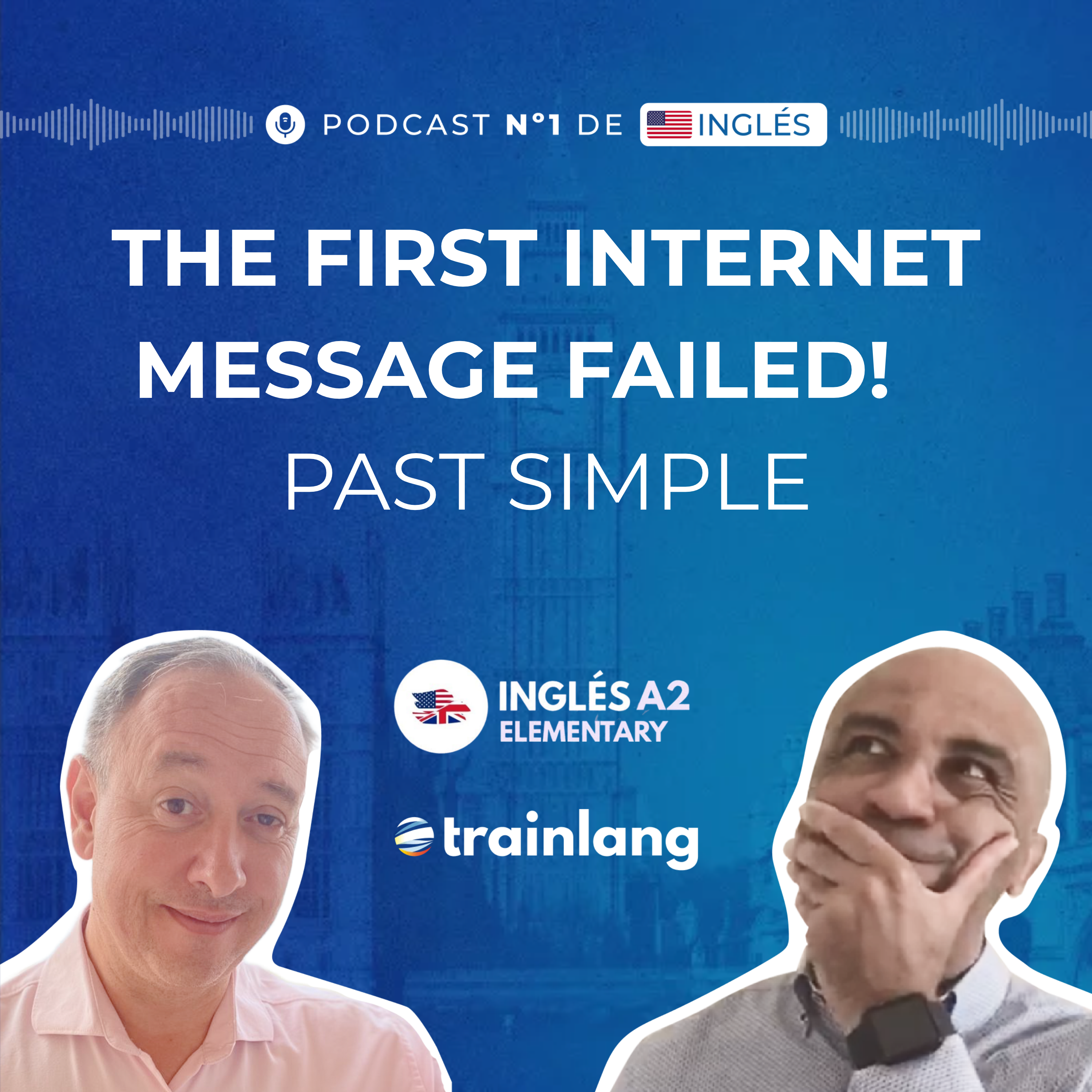
Okay, what about the first Internet message? Well, the first Internet message sent between two computers was only very, very short.
[00:17:08] Speaker A: Yes, it took place on October or in October. In 1969, researchers at UCLA, they tried to send the word login to another
[00:17:19] Speaker B: computer, but the system stopped after the first two letters.
[00:17:23] Speaker A: So the message was simply the letters L and O.
[00:17:28] Speaker B: So you wanted to send logging, but the computer crashed.
[00:17:32] Speaker A: Johnny, you see, people think modern Internet problems are new, but they're not.
It's true. And today, people send millions of messages, photos and videos every minute. But the first Internet message had only two letters.
[00:17:56] Speaker B: So now imagine a modern family group chat.
[00:17:59] Speaker A: Oh, It's a nightmare. No. 47 messages, 12 photos, six videos, and nobody answers the original question.
[00:18:08] Speaker B: Yeah, and the original question is normally, what time are we meeting?
[00:18:12] Speaker A: Then three hours later, someone sends a picture of their lunch.
[00:18:16] Speaker B: That's right.
So let us go to the first smartphone. I think we got this one here. No, that was a picture for the first smartphone. Okay. So another famous first was the IBM Simon, which went on sale in 1994.
Well, many people describe it as the first smartphone sold to the public. Wow.
[00:18:37] Speaker A: It could make telephone calls, send messages, and even use some simple applications.
[00:18:42] Speaker B: Yeah, it was a brick. Right.
It looked very different. Not from a modern smartphone.
[00:18:53] Speaker A: Yeah, Heavy, large, and expensive.
[00:18:57] Speaker B: Yeah. Today, a smartphone is a camera, a map, a music player, a bank, an office, and a source of entertainment.
[00:19:06] Speaker A: It's made many things a lot easier.
[00:19:08] Speaker B: Yeah, but it also made it more difficult to disconnect.
[00:19:11] Speaker A: Ah, so that's why our museum prize was a hotel with no mobile phone signal.
[00:19:18] Speaker B: Exactly. So which invention do you think changed the world the most, Matthew?
[00:19:24] Speaker A: Difficult question, Johnny. I don't know. I guess the Internet changed the world the most because, I mean, now it connects information, businesses, and people all over the world.
[00:19:34] Speaker B: Yeah, well, I think that the telephone was also essential because it allowed people to communicate immediately over long distances.
[00:19:41] Speaker A: Well, that's true, but don't forget the airplane. That totally changed travel. I mean, a journey that would take you weeks, you can do in just a couple of hours.
[00:19:51] Speaker B: So the important point is that none of this invention started perfectly.
The first airplane flew for 12 seconds. The first Internet message contained two letters, lo.
And the first smartphones were very limited,
[00:20:05] Speaker A: it's true, but people continued working, testing, and improving them.
[00:20:10] Speaker B: And listen to the verbs we use then in this text. The Wright brothers flew an airplane irregular. Bell made a telephone call irregular. The researchers sent a message irregular. The computer stopped working. That's a regular one. And the first smartphones changed communication. That's a regular verb.
[00:20:32] Speaker A: So they're all completed, historical actions. And so we use the past simple.
[00:20:39] Speaker B: So.
Cafeteria, Matthew.
[00:20:53] Speaker A: Okay, well, Johnny, the answer is Yesterday, Matthew found an old telephone, pressed a button, and accidentally called the cafe.
Okay, let's look at some of the verbs we've had in the. In the pod today, we spoke about find, which is an irregular verb in the past is found.
We also looked at press, which is regular. So we just add ed and it's pressed. Pressed.
Okay. Call, also regular. And that is called the n sound, like a D
[00:21:35] Speaker B: question. For interaction, imagine that you traveled back in time and saw an important invention for the first time.
So write two or three sentences in the past. Simple.
[00:21:53] Speaker A: For example, you could say, I traveled to 1903. I saw the first airplane. I didn't enter because it looked dangerous.
[00:22:04] Speaker B: Okay.
[00:22:14] Speaker A: Oh, man. You're not. You're not gonna. For the telephone, the computer, the fight, Flight simulator.
Oh, look at that.
[00:22:42] Speaker B: Okay.
Bueno.
Audris.
Simple.
Parablar daciones. Qu? Commenzaro en el pasado? Yes.
[00:22:52] Speaker A: For affirmative sentences, we use the past form. We visited the museum, for example. Or Matthew found his phone.
[00:23:00] Speaker B: Paradas, vases, negativas, utrisamos Didn't y el infinitivo required a no ponemos dos verbos empasado.
[00:23:07] Speaker A: Yeah. For example, I didn't read the sign, or they didn't go to the cafe.
Yeah. Did you enjoy the museum? Did they win the competition?
So we saw the T sound, watched, stopped, finished the D sound with more of your voice, cold played, arrived, and maybe the easiest one. After verbs with t and d, the ID sound wanted, visited, started.
[00:23:52] Speaker B: There was the. Estas estructuras nos permittend de cir que ha via o que existien el pasado.
[00:23:58] Speaker A: Yeah, they're really useful. For example, there was an old telephone in the museum. Or there were two computers in the exhibition.
[00:24:28] Speaker B: Wow.
[00:24:28] Speaker A: Thanks for listening, everybody.
[00:24:29] Speaker B: Yeah, well, keep learning, keep practicing. And remember, every great story starts with a question.
[00:24:36] Speaker A: What happened?
[00:24:40] Speaker B: See you in the next episode. Bye. Bye. Bye bye, Matthew.
[00:24:43] Speaker A: See you, Johnny.
[00:24:57] Speaker B: Sam.